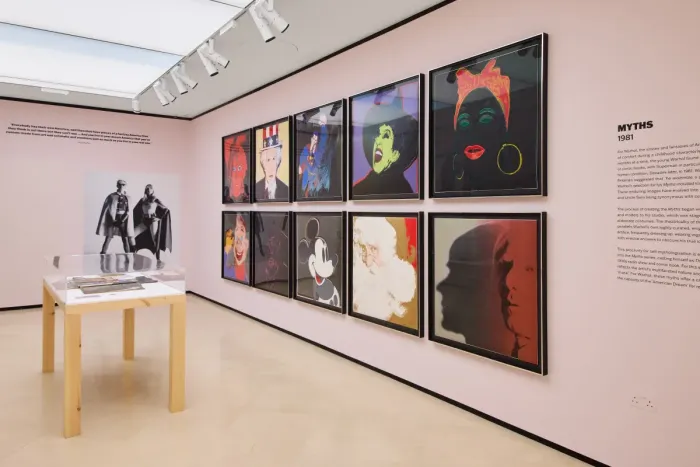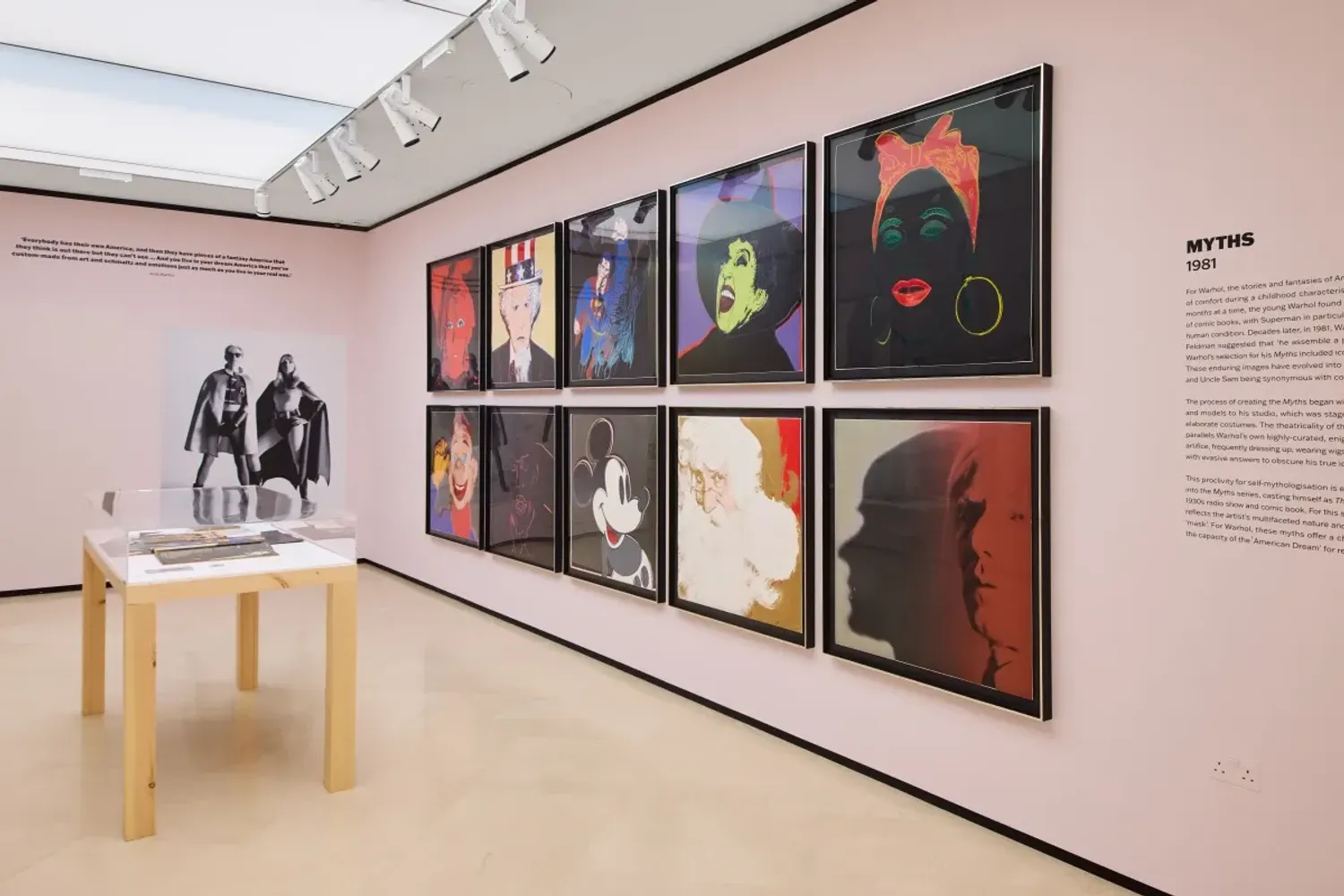
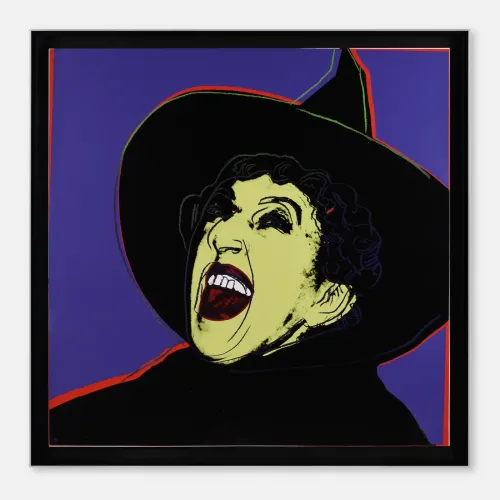
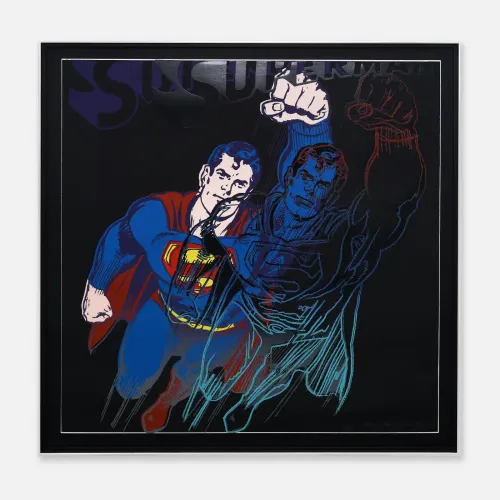
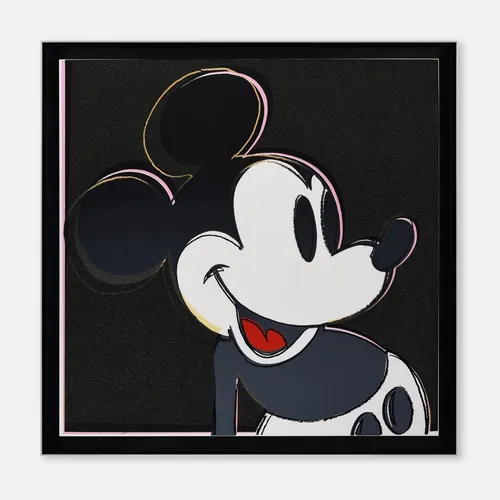
Andy Warhol’s Myths portfolio from 1981 features icons from popular culture who shaped the collective consciousness of twentieth-century America. Below, discover five things to know about the Myths portfolio.
If you’re interested in adding to your collection, speak to an art consultant today — info@halcyongallery.com
1. The idea for the Myths portfolio was prompted by a Howdy Doody doll
Created in 1981, the Myths series was inspired by Howdy Doody, a character from a classic American children’s television program. Warhol found the doll at a rural flea market he visited with his art dealer and publisher, Ronald Feldman, who suggested that he “assemble a pantheon of mythological Americana.” Warhol’s selection included figures who shaped the national imagination—from Hollywood film icons and comic-book characters of his youth to familiar archetypes drawn from fantasy and folklore. The Myths serve as a time capsule for twentieth-century American culture.
Andy Warhol’s Myths portfolio from 1981 features icons from popular culture who shaped the collective consciousness of twentieth-century America. Below, discover five things to know about the Myths portfolio.
If you’re interested in adding to your collection, speak to an art consultant today — info@halcyongallery.com
2. The idea for the Myths portfolio was prompted by a Howdy Doody doll222
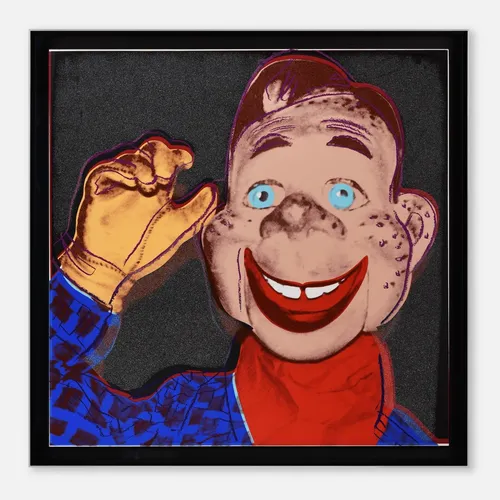
Created in 1981, the Myths series was inspired by Howdy Doody, a character from a classic American children’s television program. Warhol found the doll at a rural flea market he visited with his art dealer and publisher, Ronald Feldman, who suggested that he “assemble a pantheon of mythological Americana.” Warhol’s selection included figures who shaped the national imagination—from Hollywood film icons and comic-book characters of his youth to familiar archetypes drawn from fantasy and folklore. The Myths serve as a time capsule for twentieth-century American culture.
Test subtitle
Created in 1981, the Myths series was inspired by Howdy Doody, a character from a classic American children’s television program. Warhol found the doll at a rural flea market he visited with his art dealer and publisher, Ronald Feldman, who suggested that he “assemble a pantheon of mythological Americana.” Warhol’s selection included figures who shaped the national imagination—from Hollywood film icons and comic-book characters of his youth to familiar archetypes drawn from fantasy and folklore. The Myths serve as a time capsule for twentieth-century American culture.